SPEAKER GAIL JOSEPH: All right. So now we've been thinking
about those positive relationships, which of course are the foundation of our
teaching pyramid. It's time to go up a level, and now we're going to talk about
creating supportive environments for young children as a way to prevent
challenging behaviors from occurring. So I want you to just take a second. And
if you're currently working in an early learning classroom or child care or
maybe your child attends one, I just want you to sketch what that environment
looks like. So just take a few seconds, sketch it out just on a piece of paper,
and hold on to that sketch, because we're going to use it for another activity
later. All right. Just to remind you
about our challenging behavior curve or cycle here. We are very much down at
the green arrow times. Those times that our efforts are best made to prevent
challenging behavior from occurring in the first place. And we do that by
creating really supportive environments for children. Now in this course, I'm
going to get into some very evidence-based and practical strategies for how you
do that. But before I do that, I want to just say, what are the messages that
we want to convey to young children? What do we want our environments, whether
that's the physical environment or the temporal environment, the schedule, the
transitions. What messages do we want those things to send to young children? Well,
I'm going to say there are three big messages we want young children to know. The
first one is that this is a place you can trust. So we're going to think about,
how does the physical environment of a classroom, or how does the schedule
that's set up in an early learning program convey to young children that this
is a place you can trust? We're also going to think about another big message
is, this is a caring place. We're going to notice when you need a little bit
more support. We're going to care about you when you aren't feeling well. We're
going to celebrate when you're really happy. We are really going to care about
you and how you feel when you are here. And then the last big message is that
you belong here, that we all belong here. So this message of feeling included
or another way that we talk about it is feeling of membership. So we're going
to break these down and again get into really specific strategies, but let me
just unpack these a little bit for you. So when we think about that this is a
place you can trust, and here you can kind of think about the sketch you just
made. What in your environment conveys to young children that they will be
safe, that things will be predictable so you trust what's going to happen next,
and that this place will be helpful for you. We're going to help you to be
successful instead of waiting for you to fail. And then the next big message,
caring. Think about how do you create a physical environment, or how has your
physical environment and maybe the schedules you've set up, actually convey to
young children that we respect and rely on each other and that we recognize and
respond to emotions. And then finally that third big message, you belong here. We
all belong here. How does the environment that you've set up for young children
actually convey to them that we celebrate their uniqueness, that we are
stronger from our diversity, that we value your individuality, that we are all
a community that cares and works together? And actually this idea of developing
an ethos of membership. So we talk about membership as being the way that we
convey to children that they are included and the way that we convey to
children that everyone in the classroom is included. Now one of the best
articles ever written about membership was many, many years ago and has the
title of, "Peter, He Comes and He Goes." And it was a first grade
classroom that had a young child with Down Syndrome in that first grade
classroom, Peter. But Peter spent some of his time in a segregated special
education classroom and some of his time included with this peers in the
regular or the general education first grade classroom. And so the researchers
were asking these first graders, six and seven-year-olds, about membership. Who's
a member of your class? If you're going to name everyone that's in your class
who's a member? And time and time again, the children named everyone in the
classroom except for Peter. Now when they dug a little bit deeper to ask why,
why is it? How do you know who's in your classroom, who is included in your
classroom? And they said things like, well we have a cubby with our name on it,
but Peter doesn't. Well we were all doing working on the same thing, but Peter
works on something different. We all go on field trips together, and we wait
until we're all there before we leave, except for Peter. We have a list of who
gets Valentines and on that class list, it's not Peter. So for young children,
conveying that message in these really concrete ways that Peter comes and he
goes. He's not really a member of the classroom, because he doesn't get to
participate or have any of these physical signs of belonging in our room. So I
want to tell you a little story about membership. So membership, and then we're
going to get into even some more practical strategies, but being a member of a
classroom community really means that you're just thought of as one of the
kids. You're not somebody special that comes and goes, but you're just one of
the kids in the classroom. Membership means people wait for you. They care if
you're not there. They're going to say, where is Peter when you leave for the
field trip. It means you're missed when you're gone. Where is Peter today? I
wanted to play with him. It means that you're understood. So even if you have
some challenging behavior, you're really understood by your peers. So I want to
tell you a quick little story that maybe brings this to light. So I work at the
University of Washington, and we have a lab school here. A really famous lab
school called the EEU. And it has these one-way mirrors and microphones so you
can kind of listen in on lots of different things. And they have a kindergarten
classroom. And their kindergarten classroom, as well as their preschool
classrooms, are inclusive, really model programs for inclusion and thinking about
issues around diversity and disability and membership. They also have quite a
few children that come into their program with some challenging behaviors. And
some peers that are typically developing or who are not exhibiting some of
those behaviors. And I actually I overheard a conversation between a
kindergarten teacher and one for students. And they were just kind of having
some one on one time, which was really nice. And the teacher was reading with
this child some portion of Wizard of Oz, and it comes to this part in Wizard of
Oz where they say, I think there's somebody knocks on the door or something and
they say friend or foe? And the little girl asks, what's a foe? And the teacher
says, Oh, a foe is the opposite of a friend. It's like an enemy. It's someone
who hurts you and isn't nice. And the little girl says, well do I have a foe? It's
very worrisome. The teacher says, well, I don't know. Let's think. I'll name
some people you know, and you tell me if they are a friend or a foe, OK? And
the girl says, OK. And then the teacher starts to name children in the
classroom. So she says Lauren first, and this little girl, that's her best
friend, says friend. And then the teacher says Aidan. And the girl says friend.
And the teacher goes on and on until the last student's name is mentioned. And
this happens to be a boy named Vince. And Vince is a child in that classroom
with autism, and he had some pretty significant challenging behaviors. He's
definitely pushed some hot buttons in the past, and he sometimes is aggressive
with his peers and this little girl often gets the brunt of that. So I think
the teacher's anticipating that Vince might help make this example. But she
says Vince, and the child says, well he hits me a lot, and he ripped my paper
last week. And the teacher says, I see. I'm sorry about that. And then the
little girl says, when we were in preschool he used to pull my hair, but he doesn't
have another way to tell us things, you know. The teacher said, so. And the
little girl said friend, not a foe. I don't have any foes. So I tell that story
because somehow that teacher has really conveyed to those children a sense of
membership. That everyone, no matter what, no matter what their uniqueness is, their
individuality, if they have a disability, if they have challenging behavior,
maybe they don't speak the same language, maybe they have different diets. Whatever
it is, we all the belong. All right. Let's get to some practical strategies. So
along the way, while I'm talking about these very practical strategies, use the
sketch that you came up with a few moments ago to check back in and think about
if the things that I'm mentioning are present in your sketch, and if they
aren't, how can you add them in. So we're going to get really specific about
classroom environments, the physical environments that promote children's social,
emotional development and positive behavior. So when we're thinking about this,
I'm going to think specifically about physical space and the environmental
arrangement. Later on, we'll talk about schedules and routines, and we'll
certainly touch on transitions which can be a time when you experience a lot of
challenging behavior in a program. So let me talk about what a well-designed
physical space looks like. So a well-designed early learning physical space that
supports young children's pro-social and positive social behavior is a
classroom that's designed with a variety of areas with easily viewed
boundaries. So that when I walk into the room, it's really easy for me to
figure out where things are, where things go. And it's easy for me as a child
to kind of see where the other activities and centers are. But it's also easy
for you as an adult working with young children to do a 360 in your classroom
and see all of the children in that environment. Why is that important? Because
if you can see all of the children, you can move in and support a child that
might be starting to have some challenging behaviors, maybe moving into that
yellow arrow moment and you can move in and effectively support them. But the
other thing is that if you can see the children, they can see you. And there's
some great studies that suggest that just the presence of an adult can
sometimes stave off some challenging behavior. So you might have a child that's
about to hit their friend, but when they see you it maybe turns into a gentle
pat, right? So John Reed in Oregon Social Learning Center calls that the
scarecrow effect. Right? So just the presence of an adult can somehow keep some
challenging behaviors away. Now let me think about another thing about physical
design of classrooms and that is to avoid wide open spaces. So in a lot of
programs we might leave these wide open spaces where we gather for a circle
time, let's say. But the truth is that if I'm four, and there's nothing between
me and the door and you want me to move to the door, I'm probably going to run
or do some other kind of gross motor activity that you're not intending for me
to engage in. If the goal is to promote children running around in circles, then
wide open spaces are a great way to do that. If your goal is to have children
concentrate and engage in learning centers, wide open spaces might not be your
friend. So I'm going to show you some pictures actually what this looks like as
well. Now another strategy that's important in the physical design of the
classroom is to make sure that materials are organized in a good working order before
children get there. So we actually see that when children arrive at an
activity, if it's not set up or prepped in advance, they start to engage in
more challenging behavior. They're not sure what they're supposed to be doing, maybe
there's not something for them to get started with. So when we see things like
it's time for small group and that's when the teacher starts figuring out where
the paper is or where the scissors are, then they realize that all the glue is
completely glued shut or the glitter's completely empty. When the teacher's
using that time to frantically prep, it's guaranteed that you're going to see
an increase in challenging behavior. So we want to figure out a system, and
I'll share one with you, an evidence-based way to actually prepare to manage
that so that your program when children arrive is ready to go so that children
spend more time to engaged in learning and less time in challenging behavior. Now
another thing, and I'm going to show you some examples of this, are visual
reminders of expected behavior. So all young children have a difficult time remembering
what it is that I'm supposed to do next. But if I can reference easily a
picture on the wall that tells me, then I'm more likely to engage in
appropriate behavior. And then later on, we're going to talk about a technique
called staff zoning. OK, so I want you just look at this picture for a the
moment. So in this picture, one of the things I want to tell you that this is
actually a family child care home, and it's a lovely family child care home. But
in the picture at the very beginning what happened is that this provider, this
child care director, had all of these lovely activities completely lined up
along the wall. And what happened is that there was just this huge wide open
space. And she was concerned because children were engaged in lots of running
around, wrestling, challenging behavior, and not engaged in the learning
centers. So she made a modification in which she actually moved the little LEGO
table there and the traffic rug into the middle of that room. And just doing
that, increased engagement in the learning centers and decreased challenging
behavior. So a great example of avoiding wide open spaces. Now the next picture
I want to show you is one of visual reminders of expected behavior. I'm going
to show you a few different visuals here. So here's one that I love. So just
simply having a carpet square for young children to sit on gives them a visual
reminder of where their body needs to be, where their body does not need to be
before you start doing some large group learning time. What I also love about
this one, is that the children's names are placed behind them, so all they have
to do is find their name and sit down. But that name tag that's pretty exciting
and engaging is not right in front of them, because that would be distracting. So
they kind of forget about it, but it is there to help remind them of where they
need to sit. Now this teacher is pretty clever, because she thinks before kids
even get there about who should be sitting next to who as a way to prevent
challenge behavior. So a child that maybe has low vision, she has them closer
to the book. Maybe a child that is more likely to be off task and distracted by
the busyness of the hallway has their back to the door. Maybe a child that
would be more likely to run from the classroom is sitting furthest away from
the door. Maybe a child that's having a hard time staying on task or following
along is sitting between two peers that do a really good job of following
along, so they can serve as peer models. So all those are great prevention
strategies using visual reminders of expected behavior. I'm going to show you a
few other examples. Here this is a smaller classroom, and you can just see
they've got a nice little carpet square with these little bright circles. That's
where you go when you're ready to hear a story. OK here's another type of a
visual reminder. This teacher has put up these three picture sequences of a
child that's in her classroom doing the expected behavior at the literacy corner.
So that is take a book, look at it carefully, and when you're done, put it
back. So children can be reminded of what the expected behavior is in the
learning center there just by referencing those pictures. This is one of my
favorites, and you can see I just have a picture of it It's very well worn
because it was really well used in a classroom. This is the soft and loud
meter. So children love this. So it's just this was just kind of hand drawn and
made, nothing fancy, but you can see that the arrow is attached with a little
brad in the middle, and the children can understand if it's time for their
voices to be very soft and quiet or if it's time for them to be loud and noisy.
And so the teacher can actually move the meter as a visual reminder for
children of how their voices need to be. So if it's teacher Gail's time to read
their favorite story, then their voices need to be soft, but if we're going to
go outside and as soon as that door opens we can be loud. And I also like to
have the child that's going to have the hardest time modulating be the one that
gets to move the meter, because that just gives them some extra sense of
control in that. Here's another really great voice volume chart to our little
meter that you can use, and you can see some of these resources on the website.
And then here we have another way to provide a visual reminder for children of
expected behavior. And that is when learning centers are not open, you put a
stop sign. So these can just again be hand drawn or cutouts or whatever, but
clearly for those children, if they were going to the computer they would
understand that the computer center's not open now, right. So when you need to
control the traffic and some learning centers aren't open yet, and you want
them instead to go to the small group table, we put up these little stop signs.
This other one's actually just done on a traffic cone, one of those little
traffic cones in the classroom that says stop, come back later. It's not open. If
you don't have stop signs you can always just throw a blanket or a sheet over
the learning center, and that clearly sends to children the signals that uh-oh
this center is not open. Now sometimes children just need visual reminders of
some play ideas. So this comes from a classroom where children started throwing
the blocks, and every time they were playing with the blocks the blocks turned into
weapons and guns, and the play was just getting a little bit violent for the
teacher. And so what the teacher did is she said, let's have some visual
reminders of what you can do with the blocks. So you can build a bridge, you
can build a house, you can build a city. So when children were running out of
ideas, she would reference the visual reminder of what you could do. Now
learning in a large group for young children is difficult, so we need to always
remind them of what the expected behaviors are. So here, the teacher has put up
very stark, visual reminders of what the expected behaviors are when we're
learning in a group, or some of you might call it circle time. We keep a safe
body, we raise a quiet hand, we keep our eyes on the action. And some children
might need their own individual reminder to keep on task and to remind
themselves of having their eyes and their action, their ears are listening, and
their mouth is quiet while someone's reading a story or maybe talking to them. Here's
another great visual reminder. How do I know when it's my turn to be on the
computer? Well this teacher has actually put up a little turn taking chart so
children find their name and they put their names up. So if they were the first
one there, they get to be number one, and then when the timer goes off, Mark in
this instance would know that his time is done and he needs to find number two,
which is Adam, and say, Adam, it's your turn. So a visual reminder of when my
turn will be. So those are just a few of many ways that you can think
about using the physical environment to prevent challenging behaviors from
occurring in the first place and to support pro-social, on-task, and learning
behaviors in early childhood classrooms.
Saturday, August 23, 2014

Monday, July 14, 2014
Flamingo 火烈鸟

I have been watching the Crimson Wing by Disney Nature. It's so fascinating. Some words showing at the beginning of the documentary, gives me a nice small drill of translating from English into Chinese.

火烈鸟的拉丁文名字是 Phoenicopterus,其涵义是:“深红色的翅膀”。
传说中有一种长着深红色翅膀的凤凰, 有着幻化和重生的能力,火烈鸟就是由其灵气所催生。在生命的尽头,凤凰会焚身于火,然后在灰烬中重生。
Saturday, January 18, 2014
About the Arctic Flight
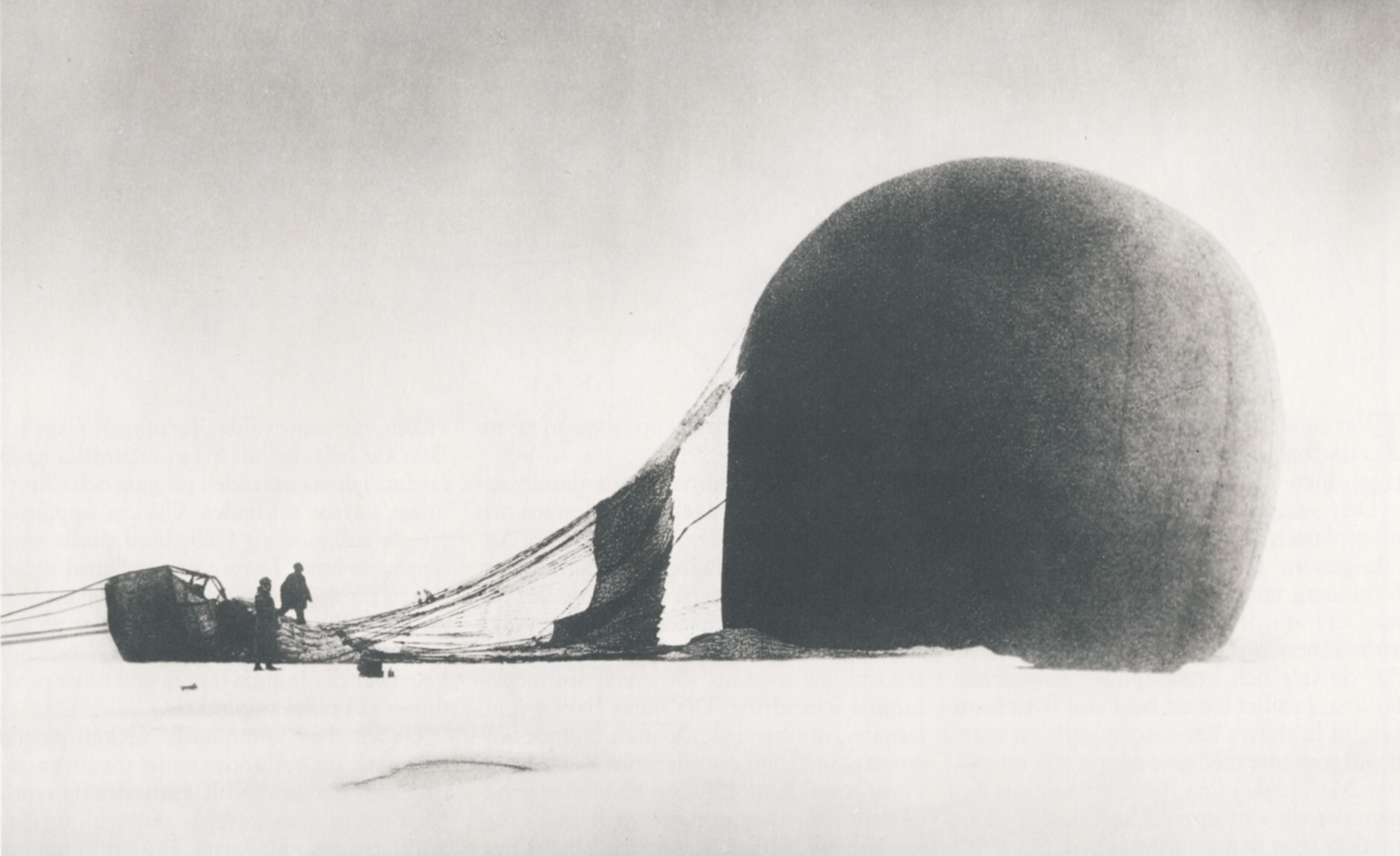
Today, I read an interesting but also very sad story about adventurers and their expedition more than 100 years ago.
Solomon Andree was an experienced hot-ballooon flyer. He had been flying hot-balloon for 10 years before he decided to start a new adventure with his friends Strindberg and Fraenkel. They wanted to fly their hot-balloon across the North Pole.
Their journey began at Dane Island on July 11, 1897. Sadly their trip turned into a nightmare soon after their beginning. They could not control the balloon as they wished. The strong wind and frozen weather made their flight very hard. Ice started accumulating on the balloon. On July 14th, they gave up flying and had to land on the ice.
They were not well-prepared for the cold weather on the ice. After pulling, pushing, dragging their heavy equipment on the ice on the ice and floating in the boat for couple of months, they reached the White Island on Oct 5, 1897. They pitched their tent and prepared to spend the winter there, but all three men were very sick and weak. Soon, they died one after another.
Thirty three years later, their bodies were found. Before their death, Solomon and his friends had written lots of notes about their adventure and also made some films. All the films and notes were well protected, so people got to know what had happened to them.
Their tragedy makes me sad, but their spirit inspires me.
More detailed story about their adventure can be found on Wikipedia:
S. A. Andrée's Arctic Balloon Expedition of 1897
Friday, January 10, 2014
Rules of Capitalization
Every sentence must begin with a capital letter.
That is a stunning sweater.
When did you buy it?
Capitalize names of people.
Capitalize every word and initial in a person's nameLarry Jay Scott J.D. Salinger
Capitalize titles and abbreviations when they appear before names
Our football coach is Coach Mathew.A new doctor will come to the hospital. He is Dr. Kevin.
Capitalize names of days, holidays, and months. But do not capitalize the name of the seasons.
Monday Christmas September springCapitalize the names of cities, states, countries, and continents.
Missoula Montana China AfricaCapitalize the names of streets, buildings, institutions, and bridges.
Brooks Street Community Church University of Montana London BridgeCapitalize words for family relations when they are used with or in place of the names of particular people. But if a family title follows a possessive pronoun such as my, our, his, it is not capitalized.
My grandpa will come to visit me soon.Aunt Marlene's house is very close to our house.
My father loves travel, but Mom prefers to stay home all the time.
Capitalize geographical names. Capitalize words such as north, east, and west only when they refer to a section of the country.
We camped in the Blue Mountain in the Northeast.The Platte River winds across the southern part of the state.
I am going to northwestern Montana.
We are going to the South.
Capitalize the name of languages and peoples and the proper adjectives associated with them.
Proper adjectives are words made from proper nouns.Often the proper noun is changed slightly and and ending is added to make it into a proper adjective.
Most Americans speak the English language.
French bread.
Oriental arts
(Americans comes from the proper noun America; English comes from the proper noun England. )
The first word of every quotation should be capitalized.
"Where is the nearest gas station?" asked Pauline.Orval replied, "Turn left at the next intersection."
The first word, the last word, and any other important words in a title must be capitalized.
Words like the, in for, from, a , an, of, on, or by are not capitalized unless they appear first or last in the title.The Mystery of the Blue Train (book)
Sports Illustrated (magazine)
"Smoke and Steel" (poem)
Many abbreviation should be capitalized.
Send the entry form to P.O. Box 73902.Devon works the 11:00 P.M to 7:00 A.M. shift.
Monday, December 30, 2013
金锁记
伴着饭茶的香味,我读完了张爱玲的《金锁记》。记得小时候我喜欢一边吃饭,一边看书。父亲总是不太赞同,怕吃饭的时候看书会伤了脾胃。不知冥冥之中,他是否会不赞成地摇头。
In the fragrance of rice and tea, I finished reading the book The Golden Cangue, written by Eileen Chang (zhāng ài líng). When I was young, I always enjoyed reading and eating the same time. My father never liked that. He thought it was very bad to my stomach and digestion. Maybe in another world, he is still worried about me right now.
曹七巧是整个故事的主人公。乱点的鸳鸯谱让她嫁入豪门,但先生是一个病秧子。出生平常人家的七巧与夫家的人格格不入,让要强的她感到处处受冷落。人情的冷暖,人世的变迁,最终将她的性格打造得乖张冷漠,那阴冷得生毒的心又毁掉了她的一对儿女。
Cáo Qīqiǎo is the main role of the book. The mismatched arranged marriage takes her into a big rich family. But her husband is always deeply sick. Growing up in an ordinary family, Cáo Qīqiǎo is never really accepted by her husband's family. Her heart becomes cold, hard and twisted after all the up and down in her life. The poison of hatred ruins her life and then the life of her son and daughter.
那个社会,那样的家庭 -- 阴冷
That society, that family --- cold and dark
生活在里面的人们 -- 乖张
The people who live in it -- surly
尚存一丝美好向往的心灵 -- 愤怒
The mind who still pursuits happiness -- filled with anger
故事的结尾 -- 死一样的沉寂
End of the story -- dead silence
在网上查查相关的信息,才发现这个故事已经有很多不同的艺术再现形式。
After I searched the Internet, I found that the story has been on stage in different art forms.
网上在线阅读《金锁记》
Read the book online
中文维基百科上关于《金锁记》的介绍。
About this book on Wikipedia in Chinese
About the author, Eileen Chang (zhāng ài líng ) on Wikipedia
In the fragrance of rice and tea, I finished reading the book The Golden Cangue, written by Eileen Chang (zhāng ài líng). When I was young, I always enjoyed reading and eating the same time. My father never liked that. He thought it was very bad to my stomach and digestion. Maybe in another world, he is still worried about me right now.
曹七巧是整个故事的主人公。乱点的鸳鸯谱让她嫁入豪门,但先生是一个病秧子。出生平常人家的七巧与夫家的人格格不入,让要强的她感到处处受冷落。人情的冷暖,人世的变迁,最终将她的性格打造得乖张冷漠,那阴冷得生毒的心又毁掉了她的一对儿女。
Cáo Qīqiǎo is the main role of the book. The mismatched arranged marriage takes her into a big rich family. But her husband is always deeply sick. Growing up in an ordinary family, Cáo Qīqiǎo is never really accepted by her husband's family. Her heart becomes cold, hard and twisted after all the up and down in her life. The poison of hatred ruins her life and then the life of her son and daughter.
那个社会,那样的家庭 -- 阴冷
That society, that family --- cold and dark
生活在里面的人们 -- 乖张
The people who live in it -- surly
尚存一丝美好向往的心灵 -- 愤怒
The mind who still pursuits happiness -- filled with anger
故事的结尾 -- 死一样的沉寂
End of the story -- dead silence
在网上查查相关的信息,才发现这个故事已经有很多不同的艺术再现形式。
After I searched the Internet, I found that the story has been on stage in different art forms.
京剧形式: Beijing Opera
电视连续剧:(总共22集,2004年上映) TV series ( 22 episodes, premiered in 2004)
网上在线阅读《金锁记》
Read the book online
中文维基百科上关于《金锁记》的介绍。
About this book on Wikipedia in Chinese
About the author, Eileen Chang (zhāng ài líng ) on Wikipedia
Monday, July 29, 2013
A folk song 牧童之歌
This song is the very first song I learned when I was in the elementary school. It's a Kazak folk song. It has been engraved in my heart. Since I have been living in Montana, U.S. The beautiful stunning scenery I see everyday just reminds me of this song.

歌名:牧童之歌
Cowboy's Song
红太阳从 天山 慢慢地爬上
Slowly rising up the red sun above the Tianshan Mountain
风吹绿草,草儿把头扬
Green grasses are waving their head when the wind is blowing
骑上骏马扬起鞭
Ride on my horse, flick the whip
赶着牛羊下河滩
Herd my cattle and sheep down to the river shore
唱上一首歌呀
Sing, sing a song
心花开放
My heart is full of joy...
Want to learn how to sing this song? Check How to sing a cowboy folk song in Chinese.
About the 天山山脉 (Tianshan Mountain ranges)
Tianshan Mountain is a large system of mountain ranges located in Central Asia. You may find more interesting information about this mountain ranges here:The link in Chinese language.
The link in English language.
Friday, February 15, 2013
The Artist 艺术家

Outside a movie premiere, enthusiastic fan Peppy Miller literally bumps into the swashbuckling hero of the silent film, George Valentin. The star reacts graciously and Peppy plants a kiss on his cheek as they are surrounded by photographers. The headlines demand: "Who's That Girl?" and Peppy is inspired to audition for a dancing bit-part at the studio. However as Peppy slowly rises through the industry, the introduction of talking-pictures turns Valentin's world upside-down.
影片的首映式上,热情的影迷Peppy Miller冒冒失失地撞上了默片当红影星George Valentin。 因为被摄影记者所包围,George表现得亲切和蔼而宽宏大度,Peppy也只好顺水推舟礼节性地亲吻了他的脸颊。被登上了头版头条“那女孩是谁?”的Peppy受到了鼓舞,前去片场应聘到了一个小小的舞蹈演员角色。但是随着有声电影开始登上舞台,Peppy逐渐成为了当红的影星,而Valentin的世界则受到前所未有的震荡。
That's the movie I watched tonight. And I like it very much.
Click here, you will get more information about this movie. Hope you will like it too.
Subscribe to:
Posts (Atom)